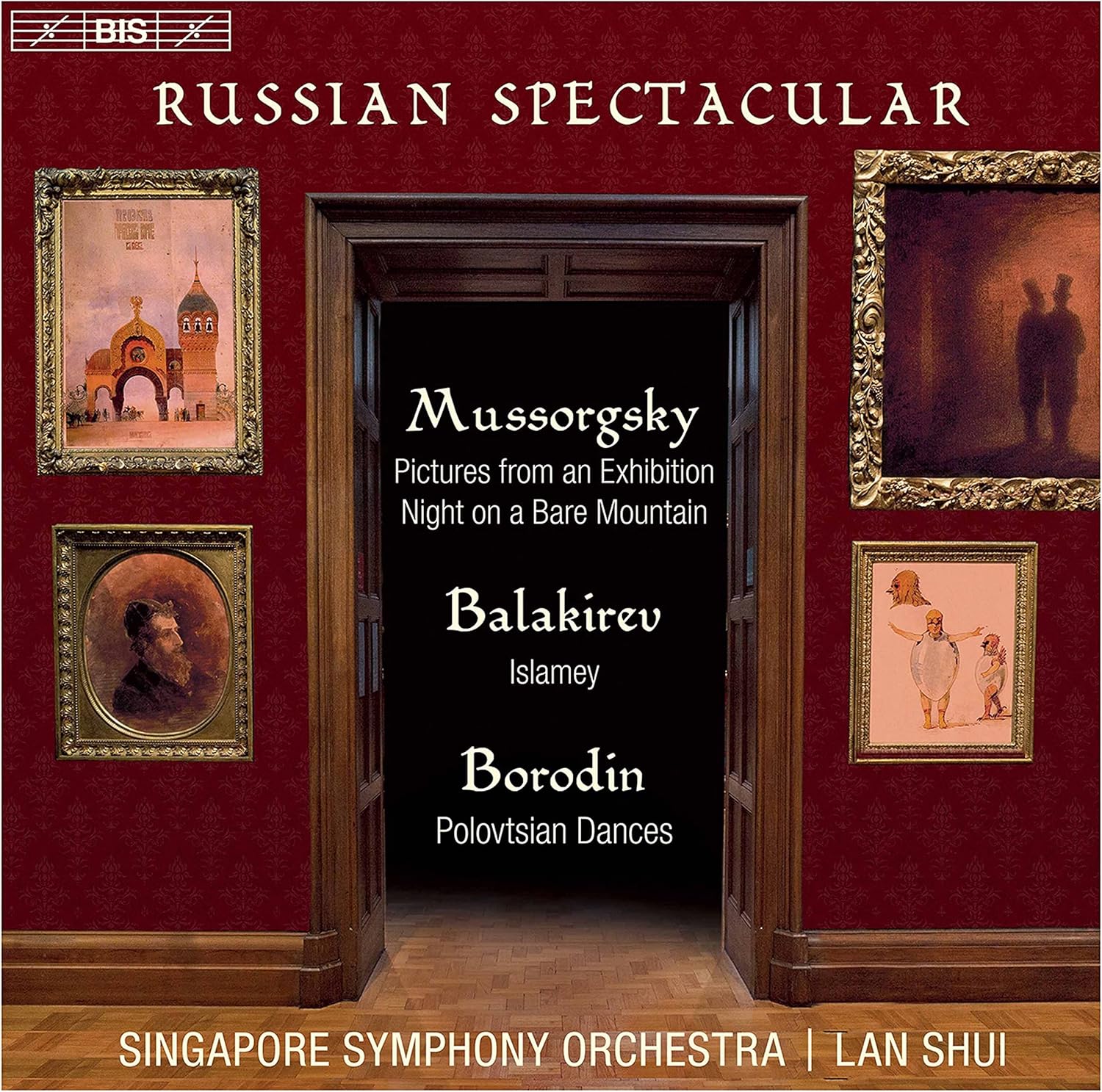
I’ve written blow-by-blow, lengthy reviews of how critics/reviewers simply do not know what they are talking about and are basically running a good-ole-boys club where their long-prized, pre-digital-era recordings from the vinyl era are automatically given default pre-eminence over anybody who dares to intrude on the hallowed ground by issuing a new recording of the same music in more modern, superior sound with a better-trained orchestra. (See my reviews of Manfred Honeck/Pittsburgh Symphony Orch doing Beethoven's 9th and 6th Symphonies.) Such is the infuriating case with this recording. I have purchased a whole lot of BIS SACDs and the vast majority of them are excellent, not only for their engineering/production quality, but the people at BIS seem to have an uncanny ability to find (previously) obscure performers to record established repertoire and to somehow come up with a performance that, engineering aside, is nearly always outstanding, often even world-class. With that BIS reputation in mind, I decided to roll the dice on this recording and take a chance. (Besides, even with 10 other versions of Pictures from an Exhibition in my library, only one of them is in Surround Sound, and it’s not that great a performance, so I needed a good Surround Sound version.) But...Singapore??? Who in the world would have ever guessed that a Singaporean orchestra with a Chinese-American conductor could make a great recording on a Swedish label of a Russian piece orchestrated by a French composer??? Well, BIS Records, that's who. Even with that wild mix of ingredients in the soup, they still somehow manage to come up with a great recipe. The review sites I looked at griped about how Shui and BIS decided to go with the Rimsky-Korsakov version of Night on Bare Mountain instead of Mussorgsky's original. As if the Rimsky-Korsakov version is so terrible that it's completely unworthy of being recorded. Then they proceeded to gripe about how everything else on this album sounds so "well-drilled" and "clean" that it (supposedly) takes all the character out of the music. They said all the notes are there and sound great, but (so they said) they can't tell the performers know WHY the notes are there. HUH???? As a former professional clarinetist with some fairly decent experience in a semi-professional orchestra, I have to say that this is one of the most useless remarks I have ever encountered about a recording. What, precisely, is it about a performance that would convince the reviewer that the musicians know "why" the notes are there? More highly-pointed rhythms? Louder brass? Quirkier-sounding woodwinds? Maybe a few tuning errors here and there or perhaps even some outright mistakes by the orchestra so that they come across as more "human"? The notes are there because Mussorgsky and Ravel (and Rimsky-Korsakov and Balakirev and Borodin) PUT them there! Sheesh. So goes the critics/reviewers and their circle of good-ole-boys. "They just don't make 'em like they used to." As a listener/musician who appreciates fabulous sound and clean performances (with plenty of energy, mind you), I say that the oldies have to prove their worthiness of not being shoved off the shelves by newer, better recordings. So, to finally start saying something about this recording...(that was a long soapbox, wasn't it? :-) ) The reviewers are absolutely right in saying that this is a very clean performance. The Singapore Symphony Orchestra sounds terrific, and they play their hearts out. What the reviewers completely miss the mark on is that Lan Shui's interpretation(s) sound so well-planned and thought-out on the long, over-arching structure of the entire piece(s), that it takes somebody capable of appreciating that big picture (no pun intended) to realize that Shui certainly does know "why" the notes are there, and I dare say with considerably more understanding than the critic/reviewer who gets to hide behind his desktop computer and doesn't have to come out on a stage to put his reputation on the line with an audience staring at him. I could argue that the Solti-Chicago recording (just for one example) of Pictures is more exciting by virtue of Singapore's brass not blowing the strings off the front of the stage like Chicago's brass did, but over the years since my youth, I have come to realize there's a lot more to orchestral music than simply the brass blowing the strings off the stage. With the Solti recording, I'm thinking, "Wow, what a great brass section." With this Shui-Singapore recording, I'm thinking, "Wow, what a beautiful picture it must have been that Mussorgsky was thinking about when he wrote this." So which one sounds preferable to you? Which one do you think will hold your interest in the long run, down the road when you're well familiar already with how the recording sounds? I am so glad that I ignored the critics and decided to take a risk on the judgment of BIS Records. They don't always hit a home run, but they did get this one right. And we are all that much more fortunate as a result to have such a terrific-sounding recording available to have in our libraries. I hope you enjoy it also.