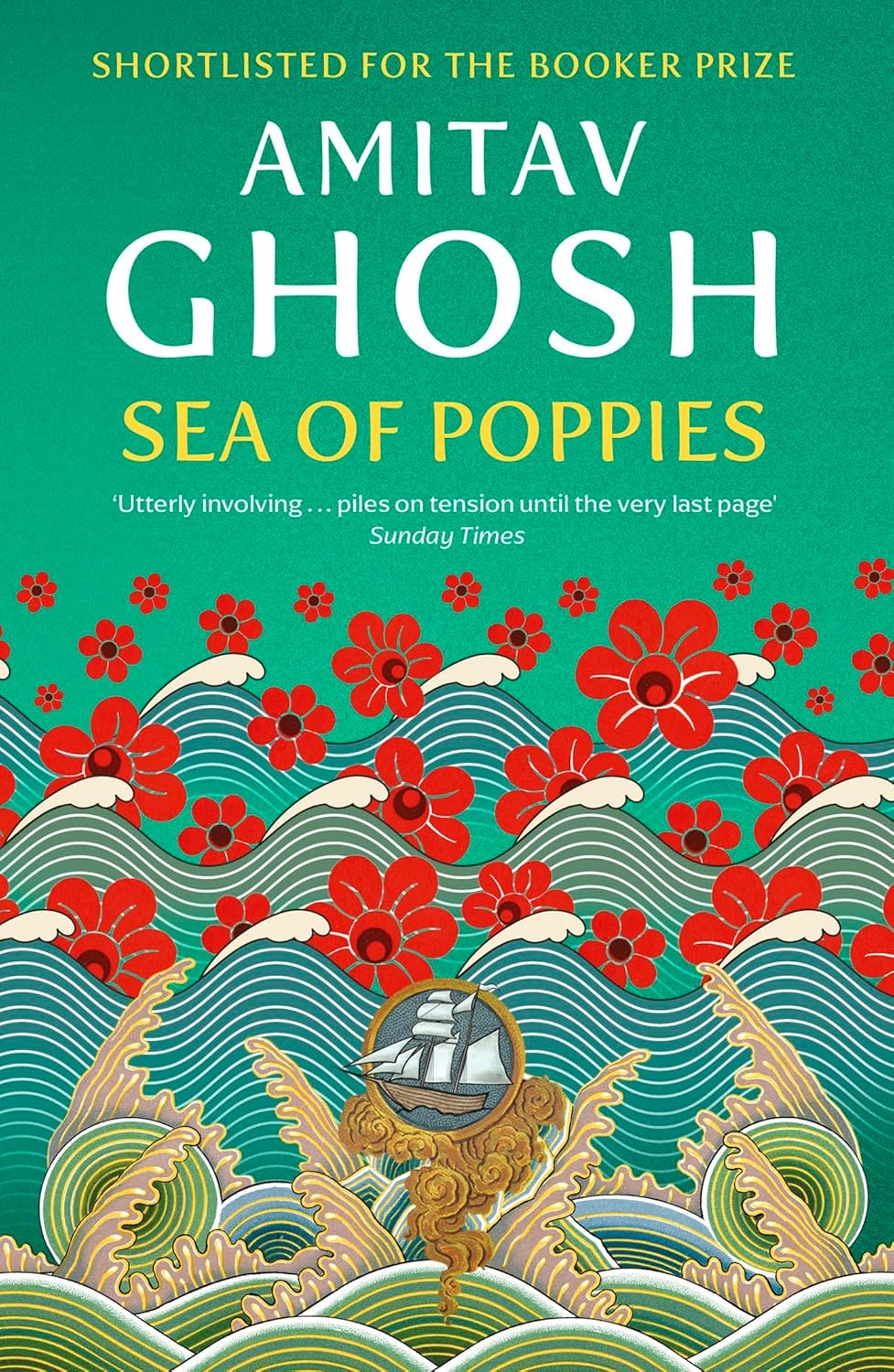
Un romanzo denso e intenso, quasi nella tradizionel dell'800
Leggere questo romanzo in lingua originale è indubbiamente un'impresa perchè la lingua di Ghosh è alquanto orignale. Ho cercato inutilmente un glossario a fondo libro che, ho scoperto, sarebbe stato gradito anche agli inglesi lingua madre. Ma l'autore ha scelto di non metterlo e l'unico aiuto che è possibile trovare è una crestomatia ([...]), che è un altro libro da leggere. Una scelta che si può comprendere, e certo accettare. Ghosh ha rivisitato tutti i linguaggi anglofoni dell'India del 1830, cercando di renderli comprensibili a chi mastica l'inglese del 2000. Ci è riuscito egregiamente, in certe pagine mi accorgevo che pur non conoscendo il significato di moltissime parole, comprendevo bene il senso e l'atmosfera della narrazione. Da questo punto di vista, una specie di miracolo. Un libro interessante, avvincente, c'è poco da dire, dò il massimo. Leggetelo in lingua originale, mi raccomando
Scritto da: Lilliput
Ottimo, promettente inizio di trilogia
Conoscevo gia' Ghosh - e gia' lo amavo - da prima di leggere questo libro. Non e' stata, dunque, una sorpresa vera e propria. E il "Mare di Papaveri" si e' rivelato all'altezza delle aspettative: una prosa piacevole, scorrevole, ma anche ricca di dettagli e ghirigori. Il plot e' affascinante e porta il lettore in mondi che sono, si', geograficamente lontani, ma non poi cosi' tanto, visto che molta della storia europea e' legata a doppio filo con quella indiana. Inoltre la scelta di leggere il testo in inglese si e' rivelata interessante: il linguaggio usato non e' quello comune. Non e' l'inglese "standard", nel senso che e' ricco di termini marinareschi, di blend tra l'inglese e l'hindi, di frasi scritte in modo piu' o meno onomatopeico. Questo rende la lettura un po' avventurosa ed intrigante. Ma bisogna conoscere bene l'inglese, altrimenti non se ne viene a capo.
Scritto da: Maurizia
mare dí papaveri
Un romanzo straordinario. I numerosi personaggi che incontriamo, ciascuno con le proprie caratteristiche compongono un mosaico di colori lucidi e sgargianti.
Scritto da: A. Mccollum
A fascinating beginning.
I enjoyed this book because Ghosh is a great writer but I didn't find it as wonderful and complete as The Hungry Tide. I still have the other two in the series to read; it could be that I need to finish the others first.
Scritto da: CINZIAC28
Simply beautiful... the style and the story...
Mi complimento per i tempi di consegna che pur essendo stati Postali .... Non hanno smentito la fama delle Poste inglesi... É la prima volta che acquisto un libro usato ... Era evidente che é stato letto maneggiando con cura perfettamente integro... Cercavo la versione inglese per una tesi letteraria... Bel romanzo
Scritto da: Reader
An excellent novel!
Excellent multidimensional story, after the first chapters which introduce the different strands of the plot, I was hooked and keen to follow the story's progress...
Scritto da: Nandha Kumar
History woven in a gripping saga
I was a fan of Calcutta chromosome by the same author. I was captured by the setting in that book which brought me to this book. Sea of poppies is an amazing start to a long, winding and satisfying story that takes you to the times when Singapore and hing kong were born as metropolitan settlements. Gripping through out. Exposes the shared pain of 19th century India and China by the British opportunists
Scritto da: M.B.
Time period, characters, language, and storytelling combine for an excellent read
There are four main reasons why Amitov Ghosh’s “Sea of Poppies” is an excellent book: the time period, the characters, the language, and storytelling. The book takes place in 1839. Although the Opium Wars are mentioned only in passing, it is their coming that sets the book in motion. All the characters’ lives revolve around opium in one way or another, whether it is growing poppies, working in processing factories, owning the land in which the poppies are grown, or running the trading companies that move opium into China. This is a time period and setting rarely explored in fiction. The story takes place on Ganges and Hooghly Rivers before moving to the Bay of Bengal. Historically, this is clearly an important region in world politics, but I know little about it. The characters are all real and believable. They are all strangely and plausibly pulled into one another’s lives. They span a diverse gamut: from an American carpenter whose mother was a slave to lower caste Hindus, from colonial entrepreneurs to sailors of murky origins. Even when their backgrounds are shown in the narrative, many of the characters remain mysterious. The language of the book is just beautiful. Ghosh mixes any number of foreign languages along with period words and slang to keep the book moving. Using context clues, it is very easy to see what each word or phrase means. The language serves to give the book color and depth. It is not necessary to understand every single word, although it is possible, because the characters always act in character, with logic according to their situation. Lastly, the storytelling is spellbinding. It is cliché to say that Ghosh “weaves” storylines together, but he does. He runs with one storyline and only in its last paragraph does the reader realize the connection with another story or character. This is artful, modern, and very poetic. I have recently tried to branch out and read more fiction. Ghosh shows exactly why I should be reading more fiction. I look forward to reading the next two books in this series.
Scritto da: Pat.
Leuk boek!
Het woorden in het Hindu taaltje of wat het ook mag wezen maakt het enerzijds wat lastiger te lezen, maar ook wel leuker.