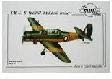
You won't get the Porta-Pad II and Electron Beam controller as shown in the picture, you'll get the Astron II pad and controller, which, according to the Estes website, is the newest launch set in their line-up. Doesn't really matter one way or another, unless you're purchasing batteries specifically for this set prior to arrival. The Astron II controller uses a 9V battery instead of the 4AA batteries that the product description tells you that you need. Also, you don't really need "plastic model cement," I use Loctite Control Gel super glue and it works great. I got this kit getting back into rockets after about a 25 year break. Didn't see the point in getting one rocket with a launch set when I could get two rockets for a couple of dollars more. I was really expecting to like the Crossfire more than the Amazon, because faster and higher is always better with rockets, right? Wrong. I built the Amazon first, since I'm a crawl before you walk guy. Used the super glue for everything except the shock-cord-to-body-tube attachment. Used white glue for that. Total building/decorating time was about half an hour, checking the instructions constantly to see what I was supposed to be doing. This is my favorite of the two in the set. It's big, it's easy to follow as it accelerates, and it's easy to track on the way down. After the last launch, I decided that I need to cut a hole in the parachute to speed decent, because I have varying wind layers where I live. I recommend the C6-3 engines over the C6-5 just because I don't really like watching my rockets nose dive for several seconds before the recovery system deploys, shortly after apogee makes me much happier. The Crossfire is a fun rocket. It goes high, fast, which is super cool. However, I've found that trying to go too high, too fast is a pain in the feet. I won't launch this rocket with anything more powerful than a B engine, because on every C launch it goes about 100' in the air and then careens to the side at about a 35 degree angle and I end up hiking forever to get to it. Which indicates to me that maybe C engines are too powerful for the stability level of the rocket. Every A engine and B engine launch has been straight as an arrow in the vertical realm, and I haven't gone more than about 50 feet to recover it. As for the launch system, it's decent and does what it's supposed to do. I was hoping that the two-piece launch rod was a screw together contraption that I could take apart for transportation and storage. It's not. It's held together with a roll pin, so you hammer it together and it doesn't come apart with any sort of ease. Which wouldn't be so bad if the joint didn't leave an uneven surface for a launch lug to catch on. I replaced mine with a 1/8" x 36" music wire. When I get something that needs the "Maxi-Rod" I'll go to my nearest home center and get a 3/16" metal rod for 1/4 the price of the Estes Maxi-Rod and it won't have a lip on it. Update 9/9/13: So I'm thinking that I may have gotten a bum set of C6-5 engines the first time. I had purchased two 3-packs of them, seperately for the different rockets. After the second time of chasing down the Crossfire I stopped using the C6-5s, leaving me with a leftover. Went out to launch the Amazon and lose some mini rockets and used the leftover engine. The Amazon went about 50' up then careened off creating a long walk for me. Intrigued, I decided to launch the Crossfire on one again the next week. The Crossfire on a C6-5 is impressive, as long as it's a good engine. Flight was beautifully straight, nearly out of sight. Make sure there's no wind and it's fun on C engines, I still stick to B engines, though, as I find them more fun with the better chance of recovery. As for the launch pad, apparently it's not designed for 3\16" rods. I got one and tried to install it to no avail. I ended up drilling out the rod holder about half way through. That way I can secure a bigger rod in the top part of the holder, and still have enough to hold the smaller rod.