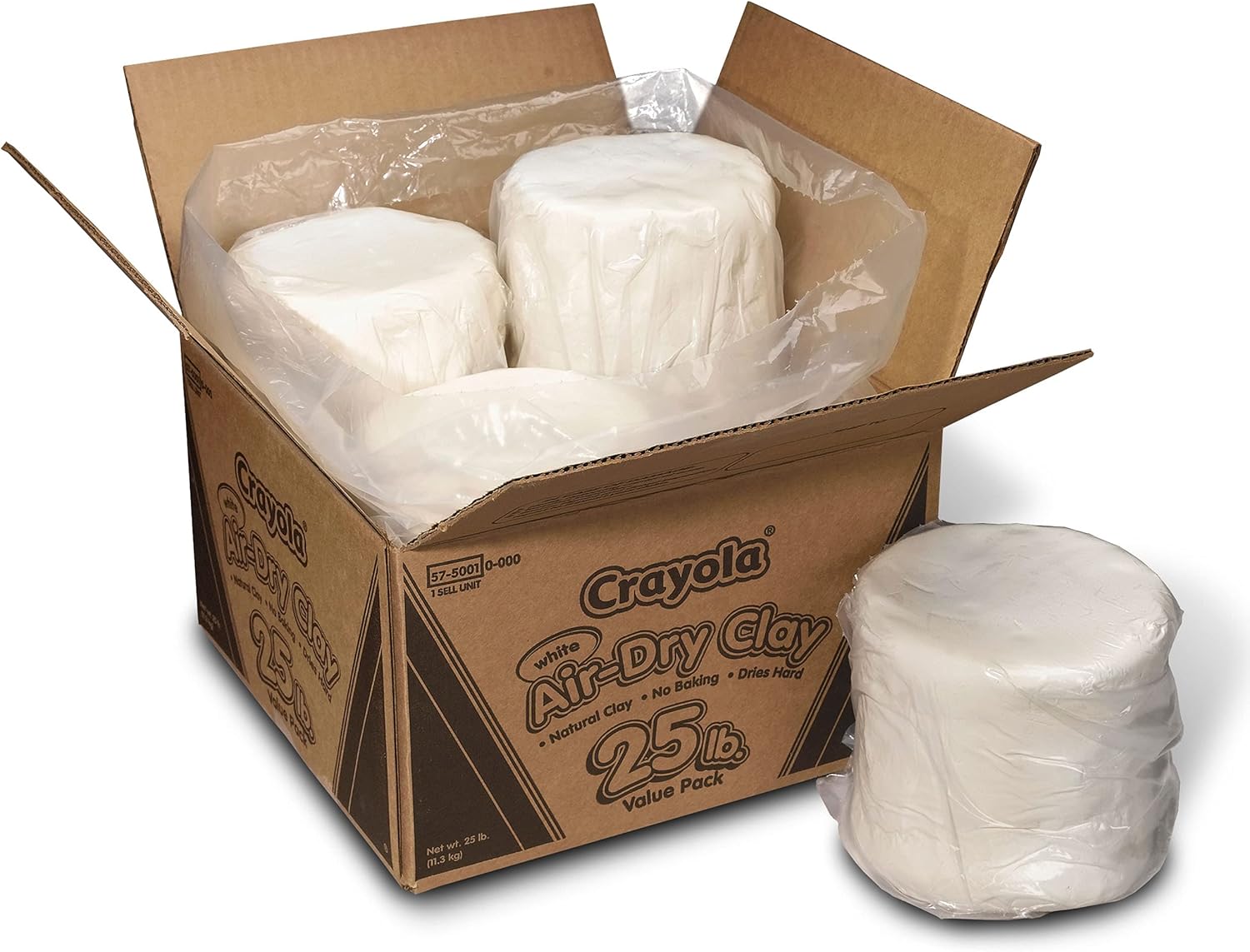
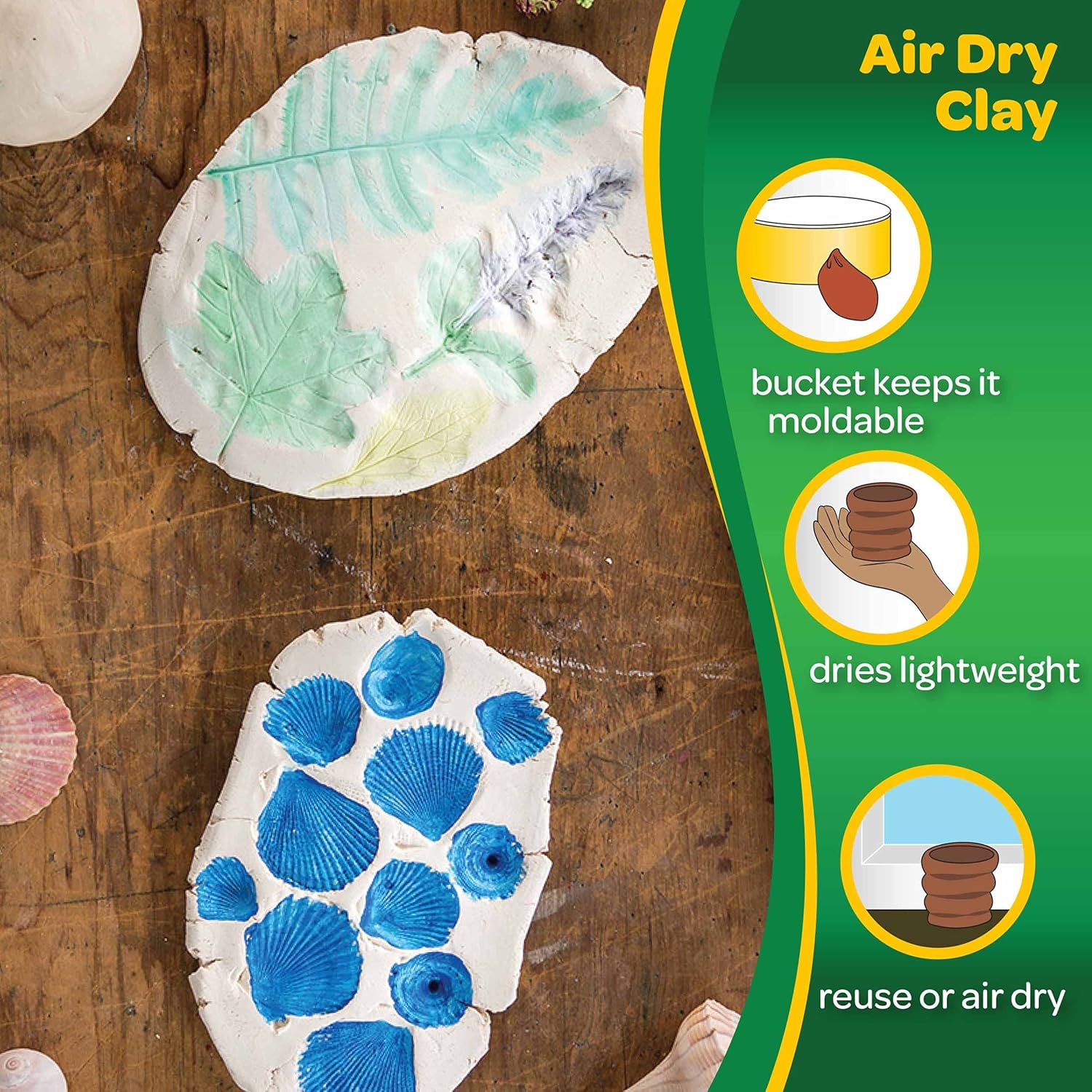
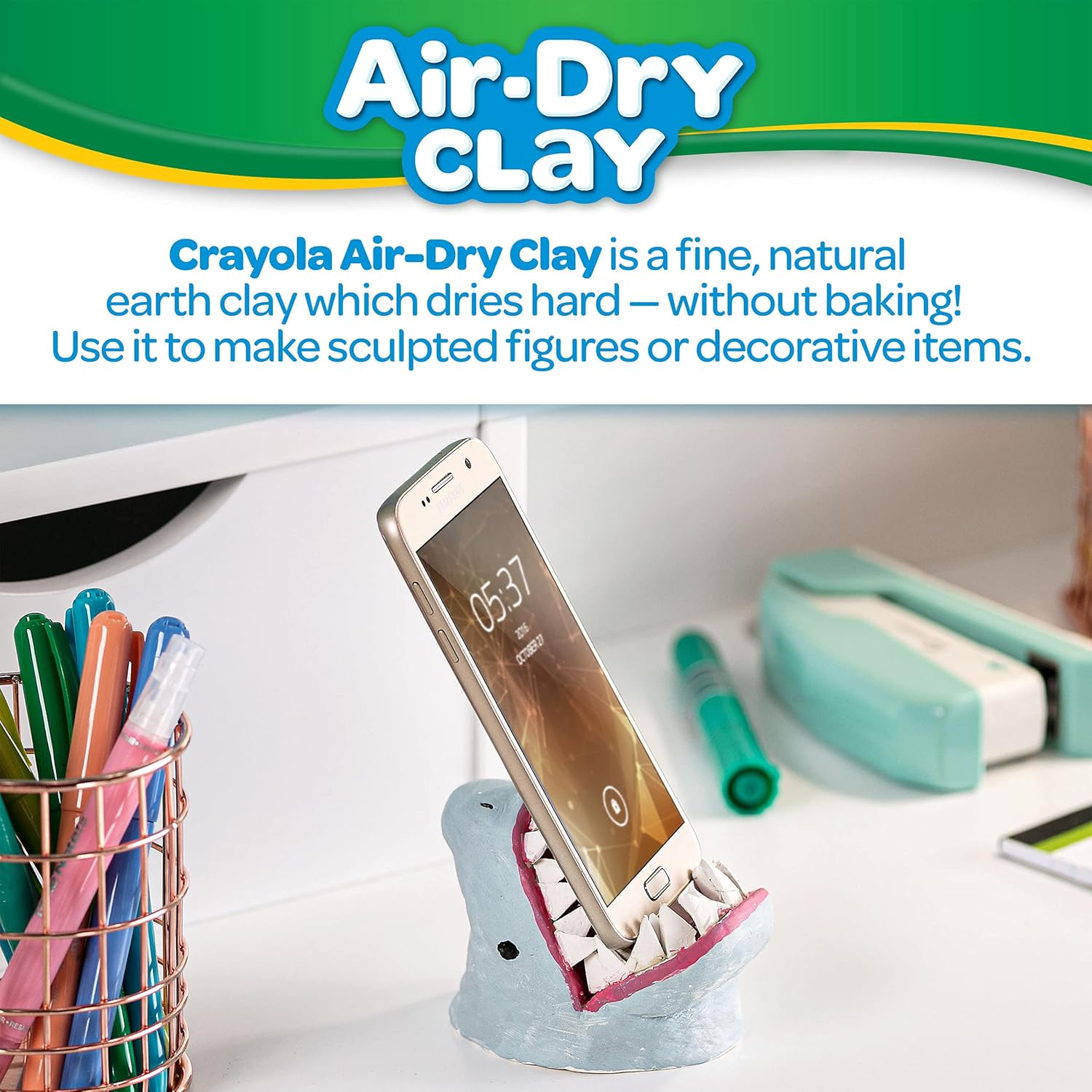
For a senior year high school project last year, I made the colosseum almost entirely out of this clay. My time limit was around 2 months, and I put almost 80 hours into this project. It ended up sitting on a 16-inch long base and weighed in at 6.8 pounds when completely dry. I used approximately 2 of the 5 pound containers. I don't think this clay is perfect, but I think of all of the options out there, this has to be the best option when making large projects and not having the option of kiln firing. Cracking is to be expected. When adding water to the clay or simply using it straight out of the package the moisture takes up a lot of space and naturally, it is going to shrink when dry. I ended up using cracks to determine where the weak points were. When filling in cracks ALWAYS overfill the crack, the clay that you put in is going to shrink, and it's easier to shave down bumps than continuing to fill in cracks that don't seem to go away. I found that carving this clay was easier than molding it. I included a picture of the details on the interior, they were for the most part entirely made by carving clay out of each row. This clay is really hard to make small shapes and strings with, so if your project is small or has tons of tiny details I would suggest picking up modeling clay instead, although making small details IS still possible, just more time-consuming. Joining pieces of clay together can be a challenge, I found that adding lots of water and smoothing down the sides of the piece you want to join to the project. Trying to join pieces in the "traditional" way (making a few lines in either piece, adding water, and pressing together) does not work with this clay, it's very stubborn. I had a big issue when starting this project as to where I was going to put it. I decided on a cardboard base, but I couldn't get the clay to stick very well. I found that gluing paper down to the cardboard and adding a thin layer of water to the top got the clay to stick. after the first layer, I had to deal with shrinking and added a second piece of cardboard to the bottom, since it bent the first one. Another trick I found was mixing acrylic paint directly into the clay can change the color and you can mix other materials into the clay- I used both of these on the sandy floor of the colosseum, beige paint and actual sand were mixed in and the clay worked just as it normally would. I seriously enjoyed working with this material, you get a ton for the price, and it works really well. This project was the first time I had ever made something large and to scale with clay, and while it does come with a learning curve, I really enjoy recreating places with it. Currently, I am working on a model of Mont St Michele, and after I will be working on making the Statue of Liberty